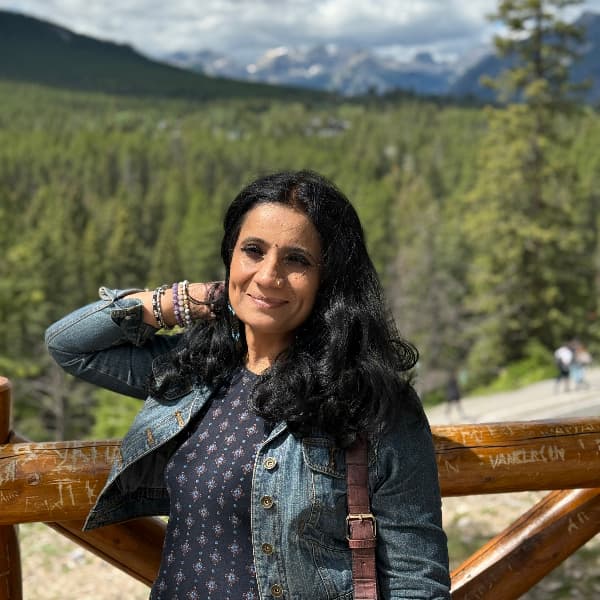
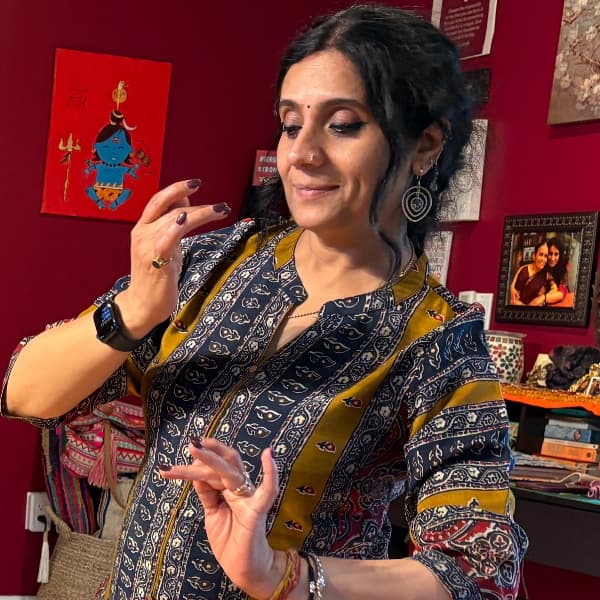
“I stopped using AI as a tool and started architecting intelligent systems — in business and in art”
Transformation Journey: Built by AI. Led by Soul.
When I joined AI Mastery, I wasn’t new to AI. I was already leading AI and analytics transformation within a global organization — prioritizing enterprise use cases, designing governance checkpoints, and enabling AI-assisted workflows. But I also had another world that needed transformation — my performing arts company, Krishnapriya Rasrang Performing Arts (KRPA).
For close to six years, KRPA grew organically — fueled by passion, performances, choreography, and teaching. But behind the scenes, it was chaos: over 7,000 files, 3.5TB of scattered content spanning 15 years of learning, creating, and performing, manual processes, and creative brilliance buried under operational overload.
Gradually, I realized the same underlying question was emerging in both worlds: How do you scale without losing your essence?
In my corporate role, the challenge was moving from fragmented AI pilots to connected, governed ecosystems — shifting from “Can AI do this task?” to “How should intelligence flow across this system?” With KRPA, the challenge went beyond organization. It was this: How do you scale a classical performing arts institution without compromising artistic integrity? And alongside that, how do you create space for contemporary expression while deeply honoring tradition?
In Indian classical arts, tradition is sacred. Yet at times it is guarded through fear of deviation. I found myself hesitating to share work consistently, wondering whether exploring new interpretations would invite judgment rather than dialogue. My deeper inquiry became this: How do we preserve the philosophical depth of our culture without carrying forward rigidity in the name of preservation?
AI Mastery gave me the framework to address both the structural and psychological dimensions of these questions. I stopped treating AI as a shortcut and began treating it as infrastructure.
In my enterprise work, this meant designing AI ecosystems instead of isolated use cases — embedding governance early, aligning workflows, and shaping culture so teams understand AI as augmentation rather than replacement. The hardest problem was never technology; it was mindset.
In KRPA, I applied the same systems thinking. As a solo founder, I built enterprise-level infrastructure — using Python scripts, intelligent file mapping, and custom automation workflows to transform my unstructured archive into a searchable content intelligence system. I developed a 90-day content roadmap, automated repetitive administrative tasks, and reclaimed over 150 hours of time.
But the real breakthrough wasn’t technical. It was clarity.
When operational chaos reduced, emotional noise reduced. Structure created safety. Systems created confidence. With that foundation, I could show up consistently, experiment thoughtfully, and articulate contemporary ideas rooted in deep understanding — without fear-driven hesitation.
I realized something powerful: AI does not replace artistry — it protects it.
By automating the operational layer, I reclaimed cognitive and creative bandwidth. I maintained full creative control — choreography, storytelling, pedagogy — while AI handled structure, indexing, and planning. In my corporate work, I now build governance models and AI agent ecosystems that connect intelligence responsibly across workflows. In KRPA, I demonstrated that even a solo entrepreneur can design systems with enterprise-level capability.
The impact has been clear structure, strategic growth readiness, the capacity to scale to 25+ students without burnout, a visibility roadmap rooted in intention rather than anxiety, and most importantly, space to create from conviction instead of caution.
AI Mastery shifted my lens from “using AI tools” to architecting intelligent systems — in business and in art. For me, AI is not about automation alone; it is about amplification — amplification of human creativity, disciplined execution, and vision. When designed consciously, AI becomes not a replacement for human excellence, but a multiplier of it.
This journey is still a work in progress. I am refining, iterating, learning, and recalibrating — in my enterprise role and in KRPA. But today, I move forward with greater clarity and deeper commitment: a clearer vision of how intelligence should flow, a stronger commitment to building systems that are scalable, responsible, and deeply human, and the resolve to grow without losing the essence at the core.
Priyanka Pradhan Kamra
Information Technology Director
Cary, United States
Related Stories
"Boosting process efficiency and developing new services to better serve our customers"
Willy de Vílchez
CEO · Zaragoza, Spain, Spain
"This course took my knowledge and skills to a whole new level. Highly recommended"
Lino Delgado
4-H Youth Development Specialist · East Honolulu, United States, United States

"As I’m planning to build my company. This course was a way to envision it"
Ania Moniuszko
Founder · San Francisco, United States, United States

“I stopped chasing ideas and started building them—with a framework that connects everything”
Sean Baxter
Entrepreneur · Loveland, United States, United States

"20 years later, I feel up to date—and AI is now enhancing how I coach my clients”
JUAN GUILLERMO ECHEVERRI
Business Consultant · Miami, United States, United States