.png&w=3840&q=75)
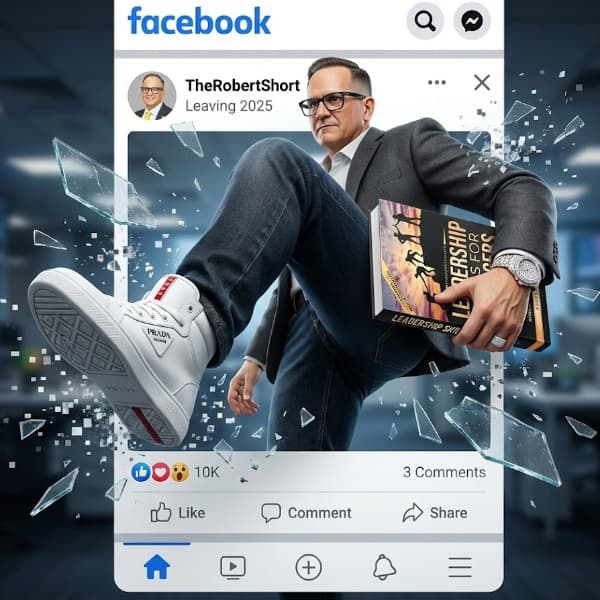
“I was the bottleneck, and now I am building clones of myself to reclaim 20 to 40 hours per week”
Before this program, I was already immersed in AI. As a senior leader in tech and the founder of my own publishing business, I was experimenting constantly. I understood prompts. I built Custom GPTs. I explored Make, Zapier, and workflow automation. I was creating content, building systems, and thinking about scale.
But everything felt fragmented. I had big ideas and strong execution skills, yet my efforts were scattered across tools and platforms. Notes lived in different places. Automations were half built. Projects moved forward, but not always with a clear architecture behind them. I knew AI was powerful. I had not yet developed a structured lens for turning it into consistent leverage across my business and leadership work.
Thanks to AI Accelerator, that changed.
I stopped experimenting randomly and started designing intentionally. Instead of asking what new tool I should try, I began asking where the true bottlenecks were. I started mapping workflows, identifying inputs, triggers, actions, decision points, and outputs. I evaluated predictability versus complexity. I designed systems with human oversight built in rather than trying to remove myself from the process.
Here are a few tangible shifts I made:
Rebuilt my publishing workflow into a repeatable content engine rather than writing one asset at a time
Applied automation thinking to my leadership brand so posts, messaging, and book ideas flow through structured systems
Identified repetitive reporting and analysis tasks and redesigned them with AI support while keeping strategic decisions human
Evaluated small, recurring friction points in my e-commerce and resale processes and converted them into scalable workflows
The biggest transformation was mindset. I no longer see AI as a collection of tools. I see it as a design discipline. I think in systems. I look for friction. I measure impact. I consider ROI. I design before I build.
And now, my work feels intentional instead of reactive.
I do not just use AI. I architect systems around it. My publishing business is more strategic. My leadership thinking is sharper. My automation projects are structured and defensible. I can clearly explain stakeholder impact and expected returns. I know when to automate and when to preserve the human touch.
AI Accelerator did not just improve my technical skills. It reshaped how I think about leverage, scale, and leadership in the AI era.
lean into how i am now building out clones of myself to return 20-40 hours of free time per week back into my schedule by applying what i learned here
Before this program, I was already deep into AI. I was building Custom GPTs, experimenting with automations, and weaving AI into my publishing, leadership, and operational work. I knew the tools. I understood prompting. I was ahead of the curve.
But I was still the bottleneck.
Every post flowed through me. Every idea required my hands. Every decision waited on my time. AI was helping, but it was assisting me, not extending me. I was productive, yet I was still trading hours for output.
Thanks to AI Accelerator, I stopped thinking about tools and started thinking about leverage.
Instead of asking how AI could help me write faster, I asked how AI could replicate my thinking. Instead of building isolated automations, I began designing systems that mirror how I reason, decide, communicate, and create.
That shift led me to build clones of myself.
Not gimmicks. Structured, purpose-built systems trained on my voice, frameworks, leadership philosophy, publishing processes, and decision criteria.
Here’s what that looks like in practice:
A leadership messaging clone that drafts posts and book concepts in my voice using my frameworks
A content architecture clone that organizes ideas into structured publishing pipelines
A reporting and analysis clone that prepares insights before I ever review the data
A sales and messaging clone that generates persuasion assets aligned with my story-driven methodology
Operational automations that handle repetitive workflows without sacrificing quality
The goal is not to remove myself. The goal is to multiply myself.
By applying the workflow mapping, human-in-the-loop design, and ROI frameworks from AI Accelerator, I am now systematically reclaiming time. Conservatively, I see a path to returning 20 to 40 hours per week back into my schedule.
That time goes into higher-order thinking. Strategy. Relationship building. Writing at a deeper level. Creating new intellectual property. Living.
The biggest transformation is this: I am no longer building content. I am building capacity.
AI Accelerator gave me the lens to identify where I was the constraint, and the framework to design systems that extend my judgment, voice, and decision-making safely and intentionally.
Now I do not just use AI.
I am building an ecosystem of intelligent extensions that think with me, create with me, and give me my time back.
And that changes everything.
Robert Short
Author
Las Vegas, United States
Related Stories
"I’ve stepped into a larger strategic role as Director of Affiliates, significantly increased my compensation and improved communication across both my job and...
Kathy Mora
Advertising Director · San Jose, Costa Rica, Costa Rica
"I now have working AI clones that assist with writing emails in my voice, summarizing meetings into actionable insights and generating videos from scripts"
Gunaratnam
Software Applications Architect · Kuala Lumpur, Malaysia, Malaysia

"I built AI tutors for my five children and cut our education costs in half while saving hours in my business"
Blaire
Internet Marketing Manager · Mount Shasta, United States, United States
"Creating my video clone was ridiculously fun"
Sharon Prior
Startup Founder · London, United Kingdom, United Kingdom

"Through the Automation Clone learning, I realised we didn’t have to buy the solution — we could build it ourselves"
Pete Walker
CEO · Greymouth, New Zealand, New Zealand
“I built an AI clone that runs my publishing company and freed myself to become a storyteller again”
E.B. Cousens
Author · Frederick, United States, United States